Wooden posts near Stonehenge
Hunter-gatherers set large posts in the ground northwest of the later stone circle. Traces of their construction show that people used this landscape thousands of years before the famous monument took shape.
 UKLifeIQ.com
Follow the events that shaped life in the UK.
c. 8500 BCE – 43 CE
Follow early communities from seasonal camps to farming settlements, stone monuments and hillforts.
Hunter-gatherers set large posts in the ground northwest of the later stone circle. Traces of their construction show that people used this landscape thousands of years before the famous monument took shape.
People arriving from continental Europe brought cultivated crops and domesticated animals. Farming changed how families used land and helped support more permanent settlements.
On Orkney, people lived in a cluster of stone houses connected by passages. Surviving hearths and stone furnishings reveal details of everyday life that rarely survive in prehistoric settlements.
People enclosed part of Salisbury Plain with a ditch and banks. The site held burials for generations before the large stone structures appeared.
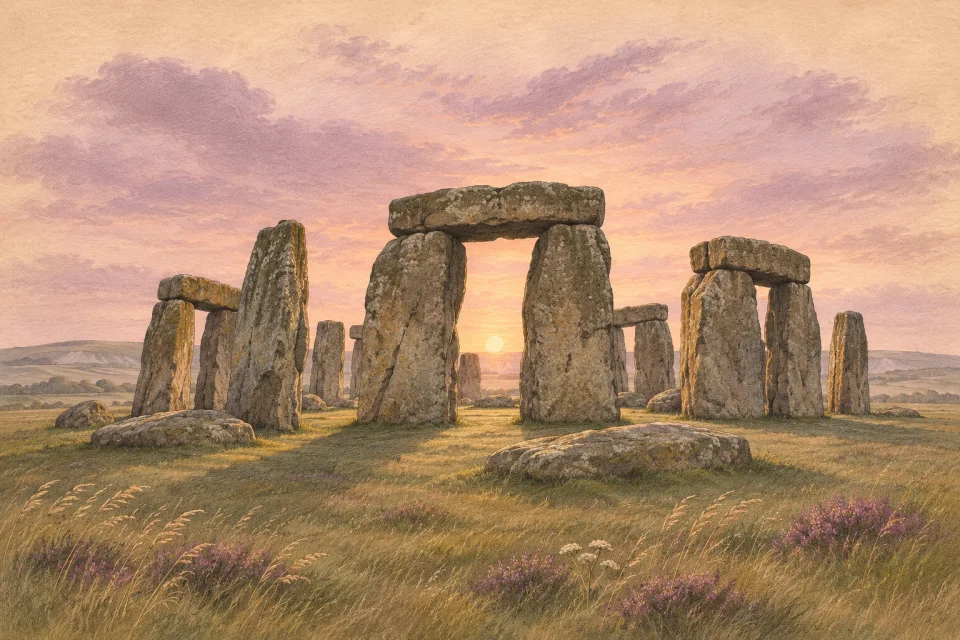
Builders moved massive sarsen stones into the Stonehenge enclosure. Raising the uprights and fitting crosspieces called lintels took coordination across a large workforce.
Makers began using bronze for tools on a wider scale. Burial goods and barrows also show changes in how communities displayed wealth and commemorated their dead.
Iron increasingly supplied tools and weapons. Over the centuries, settlements such as Maiden Castle acquired large earthworks, while trade linked communities across the Channel.